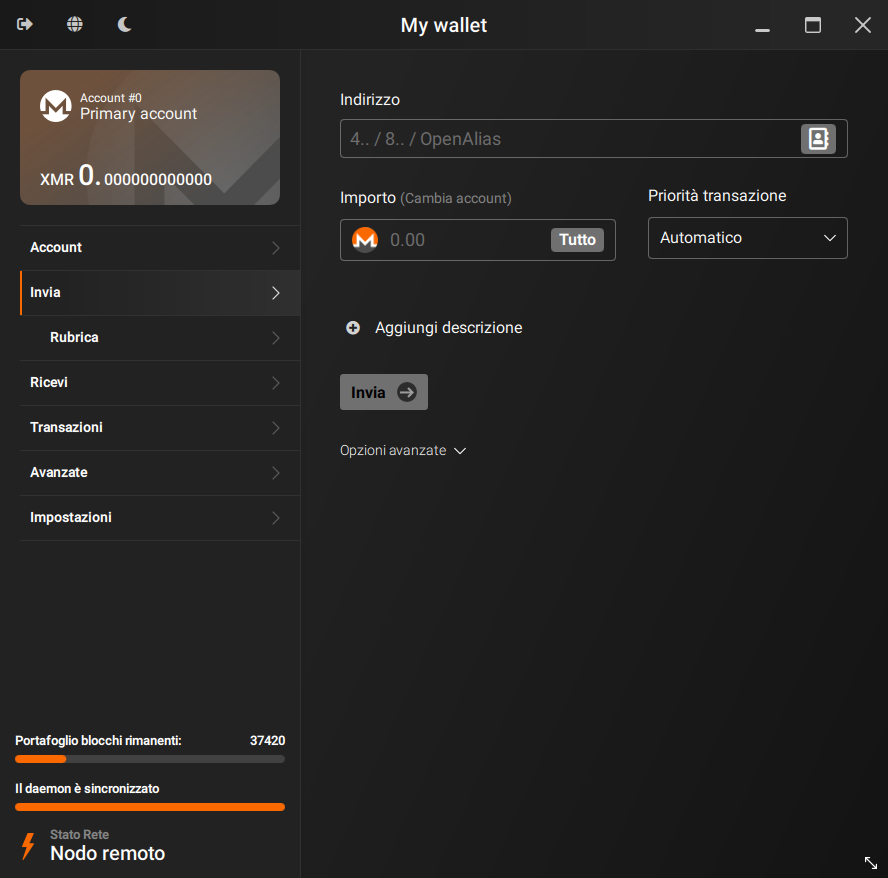
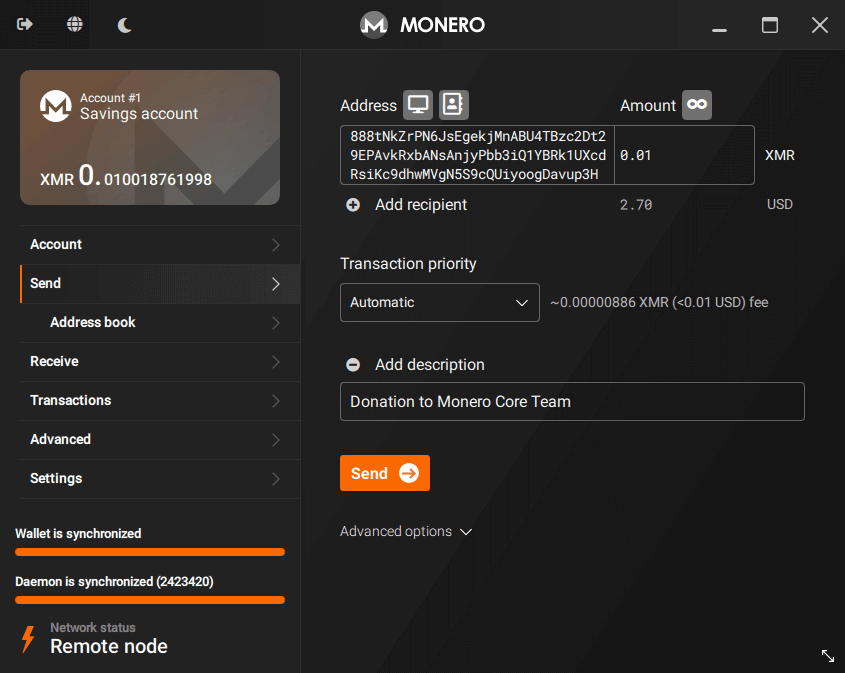
Monero gui wallet Is a desktop guide for private XMR setup
Monero gui wallet Is the official-style desktop experience many users choose when they want to create, restore, sync, receive, and send XMR with clear controls. It gives practical access to Monero without requiring command-line work, but it still asks users to understand seeds, restore height, node choices, and download verification. The safest approach is to treat the wallet as security software: download carefully, back up offline, sync correctly, and verify important details with official sources before moving value.
What is Monero gui wallet?
Monero gui wallet is a graphical wallet for using Monero, the cryptocurrency known for built-in privacy features such as stealth addresses, ring signatures, and confidential transaction amounts. Instead of asking a user to type commands for every action, the interface organizes account creation, address management, transaction history, sending, receiving, and node settings into screens that are easier to inspect. That makes Monero gui wallet useful for people who want the official desktop workflow but still want to see what their wallet is doing.
Monero gui wallet does not make privacy automatic in every possible sense. The protocol hides important on-chain details, but user behavior, device security, remote node choices, exchange records, and network metadata can still matter. A person who uses Monero gui wallet well usually thinks in layers: secure the device, protect the seed, keep the software current, avoid careless address sharing, and understand when a local node provides better privacy than a remote one.
For a new user, Monero gui wallet can feel slower than a lightweight phone wallet because it may scan many blocks to find outputs belonging to the wallet. That scanning is not wasted time; it is part of how the wallet detects funds without public account balances. Monero gui wallet is therefore best understood as a private desktop control panel rather than a simple balance viewer.
How does Monero gui wallet work with the Monero network?
Monero gui wallet works by using your private wallet data to scan the blockchain and identify outputs that belong to you. The public chain does not display a simple account balance for your address, so the wallet must check candidate outputs with your keys. Monero gui wallet then builds spendable balances locally and prepares transactions when you send XMR. This design supports privacy, but it also explains why syncing and restore height can confuse people moving from more transparent blockchains.
The protocol side matters because Monero transactions are intentionally hard to read from the outside. A recipient gets funds through one-time destination information, amounts are hidden, and senders are obscured among decoys. Monero gui wallet presents those mechanics in a usable way, but it cannot remove the need to wait for confirmations, keep a clean backup, and recognize that a wrong address or wrong restore process can still cause stress.
Monero gui wallet also depends on a daemon connection. The daemon, often called monerod, is the program that talks to the network and maintains blockchain data. In simple mode or remote-node mode, much of that work may happen elsewhere. In advanced local-node mode, the user’s computer stores and syncs the blockchain. Monero gui wallet can feel like one app, but under the surface it is a wallet interface plus a network connection.
How do you set up Monero gui wallet carefully?
Monero gui wallet setup should start with the download source, not the install button. Users should get the installer or archive from an official source and compare hashes or signatures when they know how to do so. That extra check helps reduce the risk of installing a tampered wallet. Monero gui wallet is security-sensitive software, so convenience should not outrank verification, especially on a computer that will hold meaningful value.
Monero gui wallet will ask whether to create a new wallet or restore an existing one. A new wallet generates a seed phrase that must be written down and stored offline. A restored wallet may require seed words, keys, or a restore height. The restore height tells the wallet where to begin scanning; setting it too late can make old incoming funds appear missing. For a broader download-focused article, readers can compare this with the internal guide to .
Monero gui wallet setup is usually smoother when the user makes one small test transaction before relying on the wallet for larger amounts. This is not investment advice, and it does not guarantee safety, but it is a practical workflow check. A small receive can confirm the address path, synchronization status, node connection, and transaction visibility. Monero gui wallet users should also keep notes about wallet mode and restore height without storing the seed in an exposed digital document.
Download from a trusted official source and verify when possible.
Create or restore the wallet, then record the seed offline.
Choose local-node, simple, or remote-node mode based on privacy and resources.
Wait until the daemon and wallet scan are fully synchronized.
Send a small test amount before depending on the setup.
Why does Monero gui wallet syncing take time?
Monero gui wallet syncing can take time because two related processes may be happening: the node can be downloading and validating blockchain data, and the wallet can be scanning blocks for outputs that belong to your keys. If a user says the wallet is synced but funds do not appear, the missing piece may be the wallet scan, the daemon status, the restore height, or the node connection. Monero gui wallet needs all of these to line up before the displayed balance can be trusted.
In practice, a local node can be resource-heavy during initial synchronization. Storage speed, bandwidth, CPU, and antivirus scanning can all affect the experience. Monero gui wallet running against a full local node gives more control, but it may feel like maintaining a small network service. A remote node can feel faster to start, but it changes the privacy and trust assumptions. Monero gui wallet users should not panic if a first sync takes hours, but they should confirm that progress is actually moving.
Monero gui wallet may also need a rescan after restoration or troubleshooting. If an incoming transfer is known to exist but the balance is wrong, checking the restore height is often more useful than deleting blockchain data. For older wallets, scanning from a date before the first expected transaction can prevent missed outputs. Monero gui wallet should be allowed to finish scanning before assuming a transfer failed.
Should Monero gui wallet use a local node or a remote node?
Monero gui wallet can connect to a local node or a remote node, and the choice shapes privacy, speed, storage, and convenience. A local node means your own machine validates and serves blockchain data to the wallet. A remote node means another server provides that data. Monero gui wallet works in both patterns, but users should understand what each option reveals and what each option demands.
Node choice
Practical benefit
Main trade-off
Local node
More control and stronger privacy posture
Requires disk space, time, bandwidth, and maintenance
Remote node
Faster setup and lighter device requirements
Requires more trust in the node and may expose metadata
Remote node over Tor or I2P
Can reduce direct network exposure
May be slower or less reliable
Monero gui wallet users who handle sensitive activity often prefer a local node when practical. That does not mean every remote node is unacceptable; it means the user should know what is being outsourced. A remote node cannot spend funds without private keys, but it can still be part of the metadata picture. The internal overview of is a useful companion topic for people deciding which mode fits their threat model.
Monero gui wallet can sometimes behave better when monerod is started separately, especially during troubleshooting. If the interface appears stuck, advanced users may close wallet-related processes, start the daemon, check status, and then reopen the wallet. That is not always necessary, but it illustrates the split between the graphical wallet and the network daemon. Monero gui wallet becomes easier to troubleshoot when that separation is clear.
Is Monero gui wallet safe to use?
Monero gui wallet can be safe to use when it is downloaded from the right place, verified when possible, run on a clean device, and backed by careful seed storage. The biggest risks often come from user mistakes: sharing the seed, trusting direct messages that claim to offer support, typing a seed into a website, ignoring malware warnings without investigation, or forgetting the wallet password. Monero gui wallet protects keys locally, but it cannot protect them after a user gives them away.
Monero gui wallet users should treat the mnemonic seed and private keys as the wallet itself. Anyone with those secrets can restore and spend the funds. The wallet password protects local wallet files, but it is not a substitute for seed security. If a user imports an old wallet from another app, the new Monero gui wallet password may be separate from the old app’s password. Confusing those passwords can create a frustrating situation even when funds are visible.
For larger balances, Monero gui wallet with a hardware wallet can reduce risk by keeping signing keys away from the general-purpose computer. Hardware wallet support still requires careful setup, firmware awareness, and address verification. Monero gui wallet does not turn a compromised computer into a risk-free environment, but hardware signing can improve the security model when used correctly. Users should verify current hardware support and instructions with official sources because compatibility and versions can change.
Monero gui wallet safety also includes ordinary device hygiene. Full-disk encryption, operating system updates, limited browser extensions, and a separate user profile can all reduce exposure. Some antivirus tools may flag cryptocurrency software or mining components, and users should investigate those warnings rather than dismiss them. Monero gui wallet is not affiliated with this page, and readers should rely on official documentation for current release details.
What should you do if funds do not show in Monero gui wallet?
Monero gui wallet missing-balance situations are usually about synchronization, restore height, address mismatch, node status, or transaction confirmation rather than the wallet randomly losing coins. The first step is to slow down and avoid sharing private information with strangers. Never post a seed, private spend key, or wallet file. Monero gui wallet can diagnose many visibility issues without exposing secrets.
Monero gui wallet users should confirm that the daemon is fully synced and that the wallet scan is complete. They should also verify the receiving address used by the sender or exchange. Monero addresses are long, and using the wrong saved address, integrated address, or subaddress can create confusion. Subaddresses do not need a separate public validation step; if the address was generated by your wallet and the wallet scans from the right height, it should be detectable.
Monero gui wallet restore height is a common source of old-wallet problems. If the wallet was created years ago but restored from a recent block height, older outputs may not be scanned. A rescan from an earlier restore height can take time, but it is often cleaner than repeatedly deleting local data. Monero gui wallet users should also remember that a block explorer cannot reveal ownership the way transparent-chain tools can, so wallet-side scanning matters more.
How does Monero gui wallet compare with lighter wallets?
Monero gui wallet is often compared with mobile wallets, browser-adjacent tools, and lightweight desktop alternatives. The main difference is control. Monero gui wallet can run with a full local node, expose detailed settings, and serve users who want a closer relationship with the Monero network. Lighter wallets may feel faster and simpler, especially for small everyday transactions, but they usually make different assumptions about servers, scanning, and interface complexity.
Monero gui wallet is not automatically the best choice for every person. Someone who only needs a small mobile spending wallet may prefer a simpler app. Someone who wants a desktop wallet connected to their own node may prefer Monero gui wallet. The right comparison depends on threat model, technical patience, storage capacity, and how often the wallet will be used. No wallet removes market risk, regulatory uncertainty, exchange policy changes, or the need to verify current instructions.
The protocol privacy is also different from app convenience. Monero gui wallet gives access to Monero’s privacy design, but the user still decides how to separate identities, when to use subaddresses, whether to route network traffic through privacy tools, and how to handle records. In practice, Monero gui wallet is strongest when paired with disciplined habits rather than treated as a magic privacy switch.
What should new users keep in mind before using Monero gui wallet?
Monero gui wallet rewards patience. The most reliable first experience is not the fastest one; it is the one where the user verifies the software, records the seed offline, chooses a node mode intentionally, waits for sync, and tests the workflow. Monero gui wallet can look approachable, but it is still handling irreversible cryptocurrency transactions. Mistyped addresses, lost seeds, malware, and confused restores can have permanent consequences.
Monero gui wallet also sits inside a changing ecosystem. Exchange availability, wallet versions, operating system behavior, hardware wallet compatibility, and regional rules can shift over time. Readers should verify practical details with official Monero sources and current release notes before installing, upgrading, or moving significant value. This page is informational and should not be treated as financial, legal, tax, or security advice.
Monero gui wallet is most useful when it is approached as a workflow: secure the computer, verify the installer, protect the seed, understand syncing, choose a node, use subaddresses thoughtfully, and keep expectations realistic. That workflow does not guarantee an outcome, but it reduces common mistakes. For users who want a desktop path into XMR with visible controls and serious privacy tools, Monero gui wallet remains an important option to understand carefully.
Reader rating:
5.0 / 5
based on 537 ratings
Questions and Answers
What is Monero gui wallet used for?
Monero gui wallet is used to create or restore a Monero wallet, receive XMR, send transactions, manage addresses, view transaction history, and connect to the Monero network through a local or remote node. It gives users a graphical interface instead of requiring command-line wallet commands. Users still need to protect their seed, verify downloads, and understand synchronization before relying on the displayed balance.
Why does Monero gui wallet take so long to sync?
Monero gui wallet may take time because the node can be downloading and validating blockchain data while the wallet scans blocks for outputs that belong to your keys. A local node usually takes longer during first setup than a remote node. Restore height, disk speed, bandwidth, and device performance also matter. A wallet should be fully synced before users assume funds are missing.
Is a local node better than a remote node for Monero gui wallet?
A local node generally gives a stronger privacy and trust posture because your own machine validates blockchain data and serves it to the wallet. A remote node is easier and lighter, but it introduces more trust and potential metadata exposure. Monero gui wallet can work with either choice, so the better option depends on storage, bandwidth, patience, and the user’s privacy needs.
What should I do if funds are not showing in Monero gui wallet?
First confirm that both the daemon and wallet scan are fully synchronized. Then check that the receiving address was copied correctly and that the wallet restore height is earlier than the first expected transaction. Do not share your seed, private keys, or wallet file with anyone offering help. If the wallet was restored recently, a rescan from an earlier height may be needed.
How should I back up Monero gui wallet safely?
The most important backup is the wallet seed phrase, stored offline in a place protected from theft, fire, loss, and casual discovery. The local wallet password protects files on the device, but the seed can restore access elsewhere. Do not store the seed in cloud notes, screenshots, email drafts, or chat messages. Anyone with the seed can potentially spend the funds.
Can Monero gui wallet be used with a hardware wallet?
Monero gui wallet can be used with supported hardware wallets in compatible setups, which can keep signing keys away from the general-purpose computer. This can improve security for larger balances, but it requires careful setup, firmware awareness, and address verification. Users should check current official instructions and supported versions before relying on a hardware wallet configuration.
Is Monero gui wallet completely anonymous?
Monero gui wallet uses Monero’s privacy-focused protocol, which hides important on-chain details better than transparent blockchains. Complete anonymity is not guaranteed, because network metadata, exchange records, device compromise, address handling, and user behavior can still create risk. The wallet is best treated as one privacy layer within a broader security and operational plan.
I remember the first time I opened a Monero wallet. Wow! The GUI felt both friendly and a little mysterious. My instinct said this was different from Bitcoin right away. At first I thought privacy was just hype, but then transactions started looking like a tangled knot of plausible deniability and I paused. Really?
Here’s the thing. Monero isn’t just another cryptocurrency that slaps “privacy” on a label. It uses ring signatures, stealth addresses, and ring confidential transactions to obscure sender, recipient, and amount, and that combo actually works in practice. Something felt off about simple comparisons like “Monero equals anonymous” — it’s more nuanced than that. On one hand, Monero makes chain analysis much harder. On the other, no system is perfect, though actually the design choices are thoughtful and deliberate. My gut reaction was relief, then cautious curiosity.
Using the Monero GUI wallet is where theory meets real life. The GUI smooths out key management, seed handling, and node syncing in ways that reduce user error. I’ll be honest: when I first synced a full node, I felt like I was babysitting a tiny server. But once it synced, the sense of control was satisfying and freeing. For many users, a remote node works fine—just know the trade-offs. A remote node is convenient but trusts that node with some metadata. Running your own node gives you that extra layer of trust and privacy. I’m biased, but I prefer the self-hosted approach when I can.
Getting started with the GUI and where to download
If you want to try it right now, grab an official installer from a trusted source like the project site or community mirrors, and double-check signatures. For convenience you can also use this monero wallet download when you need a quick, guided fetch. Seriously, verify the checksum—just do it.
Okay, practical tips. First: back up your mnemonic seed and keep it offline. Short sentence. Second: use subaddresses for everyday receipts so you avoid address reuse and keep your bookkeeping cleaner. Third: consider connecting over Tor or I2P if you’re in a high-threat environment. On the other hand, Tor can be slower and sometimes flaky, though it adds an important privacy layer.
Now, fees. Monero’s fee structure has been reasonable historically, thanks in part to Bulletproofs which shrank transaction sizes. Initially I thought fees would make privacy impractical, but after Bulletproofs landed, things improved a lot. Fees still fluctuate with network demand, but they’re usually quite modest. If you’re moving very small amounts frequently, though, privacy tech and fee economics can collide in annoying ways.
Hardware wallets. Use them. Really. Ledger and Trezor integrations exist and they make signing transactions safer. It’s not glamorous, but it’s effective. I once sent a test amount without hardware signing and nearly cursed when my machine hiccuped. Not fun. Hardware wallets remove that nervousness. However, set them up carefully and verify device firmware—don’t skip those steps.
About nodes and remote connections: running a local Monero node provides the best privacy posture. That said, I get that not everyone has the bandwidth or inclination. If you use a remote node, rotate it occasionally and prefer community-operated, well-known nodes. There’s no magic bullet, and trade-offs are real. Also, check your GUI settings—leaking your IP to the node is avoidable, but only if you know what to toggle.
Here’s a nuance people miss: privacy is behavioral as much as technical. Using the GUI perfectly but walking around online signing receipts with your real identity is a nonstarter. Hmm… personally I cringe when I see “privacy first” but then sloppy opsec. Make a plan. Use multiple wallets for distinct purposes. Use subaddresses and never reuse them unnecessarily.
Another thing—chain analysis resistance is strong, but it’s probabilistic. Monero makes linking transactions computationally and practically expensive for analysts. Yet targeted deanonymization via metadata, mistakes, or compromised endpoints can still happen. Initially I thought “bulletproof privacy” was possible, but then reality nudged me: you’re mitigating risk, not eliminating it.
Privacy coin politics come up a lot here in the US. Regulations are a moving target, and exchanges vary in how they treat XMR. Some venues ban it, others accept it with caveats. That uncertainty bugs me, because technology and policy are dancing a slow, awkward two-step. If regulation tightens, user choices may narrow—but we’ll adapt. There are community tools and privacy-aware services emerging constantly.
Usability improvements keep arriving in the GUI wallet. Subaddress management is simpler now. Exporting view-only wallets for accounting or watch-only setups is easier. The devs iterate and listen to the community in ways I didn’t expect at first. Sometimes updates break small things, though—double words happen, and a quick restart fixes most annoyances. Somethin’ like that.
Okay, a quick checklist for a safe Monero experience:
Back up your seed and store it offline.
Prefer a local node when possible; use Tor if needed.
Use subaddresses and avoid address reuse.
Consider a hardware wallet for large balances.
Verify downloads and checksums before installing.
Honestly, some of this is common sense, but common sense can be rare online. I’m not perfect either—I’ve made configuration mistakes and learned the hard way. Those mistakes taught me more than any forum thread did, actually.
Frequently asked questions
Is Monero truly private?
Short answer: it’s among the best for on-chain privacy. Long answer: Monero obscures sender, receiver, and amounts by default using ring signatures, stealth addresses, and confidential transactions. Those features make linkage far more difficult than with transparent ledgers, but real-world privacy still depends on user habits, node choices, and external metadata. Initially I thought privacy was binary, but it’s more of a spectrum.
Should I run a local node or use a remote node?
Run a local node if you can. A local node gives you stronger privacy and trustless verification of the blockchain. Remote nodes are fine for convenience or low-risk usage, yet they require trust in the node operator and can leak timing or IP information if you’re not careful. On balance, local nodes are worth the effort for those serious about privacy.
So where does that leave us? I’m more optimistic now than when I first peeked at Monero, yet also more humble about what privacy actually entails. New users should start with the GUI, respect the seed, and learn node basics. Over time you’ll appreciate the built-in protections and understand the behavioral side of privacy. There’s no silver bullet. There’s steady, useful tech and a community that genuinely cares about protecting financial privacy.
Finally, if you’re ready to try the GUI and want a straightforward starting point, consider the monero wallet download link above and follow the verification steps. Take it slow. Tinker. Be curious. And remember—privacy is a practice, not a checkbox.
We use cookies and similar technologies to improve your experience on our website.
We use cookies and similar technologies to improve your experience on our website.